Author: vipmagsc

  • Fun Ways to Dye Easter Eggs

    Fun Ways to Dye Easter Eggs

    story and photos by Rebecca Giese

        Growing up, I have always loved dying Easter eggs. I still have no reserve when it comes to decorating eggs, tossing aside the rules – mixing colors, double dipping and throwing the metal egg holder aside to dye the eggs by hand. I love the whimsical and child-like feel of dying eggs. This year I thought I would push aside the traditional dip and dry eggs and share three different Easter egg decorating crafts for you and your family to try this year.

        No matter your crafting expertise, I have some Easter egg decorating ideas to impress your guest or just entertain your kids this year. All three of the egg designs start with traditional large white eggs, hard boiled. You can now buy dyeable fake eggs at the craft or superstore if you have an egg allergy or want them to last for years to come.

        First up, the underrated yet adorable Stickered Eggs. What makes these eggs so precious is the textured and three dimension stickers like the pearls and butterfly wings seen in the photo. You can pick up these stickers at any craft store or online. I love this one if you have little kids or grandkids and don’t want to make a huge mess or stained tables and fingers. Give them a pile of different stickers and see what kind of design they create!

        Gradually increasing the messy level, next up is the Cartoon Creature Eggs. For these eggs, you will need an egg dying kit and an edible black marker. I have found them in a superstore or craft store cake decorating section. If you are using fake eggs, you can use a Sharpie. Set up the dying kit as directed on the box. Then dip the side of the egg into the color of your choice. Just sink it in enough to have an oval shape on one side. (I suggest leaving the dying to the adults for this craft.) Once dipped, rest the eggs dyed side face down across an egg carton, this helps with any dripping and run lines of excess dye. Once dry use the edible black marker to create the features of bunnies, chickens or create your own! The marker is not permanent and quickly came off hands, but if you want to let your kids explore their creativity, I suggest wearing a smock or play clothes because I am not a hundred percent sure if it will come out of clothes.

        Last but not least is the messiest, and I think the coolest egg, the Tye Dye Egg. Warning, this one did leave my hands a fun shade of purple until I took a scrub brush to them aggressively. But I think the results are worth it! For this craft, you will need a plain white paper napkin (not towel but an actual napkin that you can unfold into a large thin piece of paper), rubber band, and liquid food coloring. Unfold the napkin and place the egg in the center then bring up the sides of the napkin and enclose the egg within by wrapping a rubber band around the excess napkin. Make sure the paper isn’t too taut or the rubber band too tight so that the egg doesn’t crack under pressure, plus it makes it easier to remove later. Hold this excess napkin and drop food coloring onto the napkin in a random pattern to cover the egg. One drop goes a long way so be careful. I suggest leaving some white space between different colors to see the magical tye dye effect of them blending. Set aside the tye dye egg contraption for at least five minutes to have the colors blend, then carefully cut the rubber band and remove the paper and let the egg dry the rest of the way.


    What’s on My Radar?

    Kalmia Gardens plant sale in Hartsville South Carolina, April 6th, find plants and garden art by the local volunteer gardeners raising money to maintain the extensive landmark gardens. If you can’t make it to the sale, you should come out and see what’s blooming!

    Southern’spirations is expanding to the retail marketplace! Find art and home decor created by the Southern’spirations team along with curated pieces to bring a little joy to your home and spark your creativity!  Starting April 1st, find us in booth 23 at Fleur De Lis, near Hartsville.

    ArtFields in Lake City April 26th-30th, celebrate and discover the talented artist of the Southeast while exploring all Lake City has to offer!


    Currently residing in Hartsville, Rebecca Giese enjoys exploring the Pee Dee area, shopping local artisans, trying new restaurants, and finding inspiration from the history and culture surrounding her. When not out on an adventure, she’s telling stories on her blog, Southern’spirations.

  • Benefitting the Citizens of Our Community

        The Greater Hartsville Chamber of Commerce strives to connect businesses and the community with the resources they need to be successful. This year, our goal has been to provide more opportunities and events for a wider population of the community in the greater Hartsville area. While we continue to stand behind our member businesses and will continue to provide opportunities and connections for both employers and employees, we have shifted part of our focus in 2019 toward hosting events that can benefit the citizens of our community in a capacity like never before.

        In February of 2019, the chamber hosted its first ever Active Shooter Training. Led by Lt. Mark Blair of the Hartsville Police Department. This event originally started as a free seminar for up to 25 people in the chamber’s Board Room. However, interest in this event skyrocketed in a matter of days, leading to a change in facilities to accommodate the sixty-three-person registration list.

        We are so excited to be doing more events like this in the future for the greater Hartsville community. It is our hope that by offering community-based events, the chamber can not only extend its reach and impact in Hartsville but that it can also help “Hartsvillians” gain a better understanding of why the chamber exists and what it can offer. More upcoming events in the near future include:

    2019 Self-Defense CourseLearn self-defense from First Sergeant Michael Weatherford of the Hartsville Police Department at the Self-Defense Course on Saturday, April 6 from 8 a.m. to 2:30 p.m. at the TB Thomas Gymnasium. This course is open to women only and has limited registration.

    2019 Outlook Series: Healthcare ForumOn April 11, 2019, from 11:30 a.m. – 1 p.m. at Butler Heritage Auditorium, experts in healthcare will present on the outlook of healthcare in the greater Hartsville community.

    2019 Doggie Dash 5K The entire community is invited to join Hartsville Young Professionals for a 5K benefitting Byerly Park’s Dog Park. This race is aimed to raise $5000 for additions and improvements to the existing area at Byerly Park. This race is dog-friendly! The race will start at 8:00 a.m. on May 4, in front of the Hartsville YMCA.

    2019 Taste of Hartsville – On May 16, starting at 6:30 p.m. the Greater Hartsville Chamber of Commerce will present the Taste of Hartsville yet again as “Hartaritaville.” This event will be held at Burry Park in Hartsville, SC. Sorry, because libations will be served, no guests under 21 years of age will be admitted.



     

    For more information on upcoming chamber events, visit our website www.hartsvillechamber.org, follow us on Facebook and Instagram, or call us at (843) 332-6401.

  • Weighing In On The Business Of Scales

    story by Heather Page

        Have you ever thought about scales, an instrument or machine used for weighing? Not the scale you use for your morning weigh-in to ensure you haven’t gained that extra unwanted pound. I’m referring to the sort of scales that measure almost every item we use in our daily routines. Like the scales that measure the smallest amount of ingredients to complete a heart medication for your loved one or even the scales that eighteen-wheelers drive across to make sure they aren’t exceeding the weight capacity of the highway. If you’re like me, these scales have always been in the background of your life, only you haven’t stopped long enough to admire them and all they do for us on a day to day basis. However, the topic of scales is always on the tip-of-the-tongue or whirling around the minds of employees at Toledo Carolina, known by many locals as Toledo Scales.

    Bret Greer, President

        To tell you a little about the company, in 1967, Jack Greer founded Toledo Carolina, a Premier Authorized Distributor of Mettler-Toledo Scales (mt.com), that now covers 25 counties in Northeastern S.C. and Southeastern N.C. Shortly after opening, Jack hired his brother Grady who became the visionary and was instrumental in successfully putting the company on the map. In 1992, Grady’s son Bret began working for the company and by 1998 Bret took over operations. At that time, Toledo Carolina had begun transforming from electro-mechanical to weight data integration to computers which basically means machines could now be run via computers versus a manual switch.

        Toledo Carolina is an intricate piece of the puzzle that contributes to the success of many local corporations including WestRock, Patheon, Otis Elevators, Fort Bragg, Goodyear Tire and Nucor Steel, just to name a few. The company furnishes these businesses with durable, high-quality scales from 1/10th milligram to 500 tons, with an emphasis on service. “Service is the heart of our business,” says Bret. “When a customer calls, we show up within four hours and stay until the project is complete. We try to prove ourselves every day and it helps that the product line we provide ranks number one against its competitors.”

        In addition to being available for service issues and selling scales, Toledo Carolina visits its clients on three- or sixth-month intervals to calibrate the scales to avoid incorrect readings that could cost a business a substantial loss. With medications, for instance, raw materials must be weighed very precisely and accurately. If they aren’t, the pharmaceutical company could lose a batch that would cost a significant amount of time and money.

        A company that is this invested in its business relationships also believes in the power of building a better community. Bret serves and has served on many boards throughout the Pee Dee area. For their 52 years in business, Toledo Carolina has remained a member of the Greater Florence Chamber of Commerce, where Bret and his father Grady have also served on the board.

        Toledo Carolina is celebrated this month as the Florence Chamber’s business of the month. It’s within the Chamber’s efforts to make people aware of the businesses that build our community. In this instance, who could have imagined that scales would play such a significant role for our local industries? Without the expertise and top of the line products provided by Toledo Carolina, many of these industries would have to outsource these services, costing more time and more money. So the next time you notice the “Net. Wt.” on your shampoo bottle or ride amongst big rigs on Interstate 95 carrying trees, be aware that Toledo Carolina may have played a small role in making these actions happen!


    100 W Evans St, Florence | 843.665.0515 | flochamber.com

  • The History of Judge John J. Parker

    The History of Judge John J. Parker

    story by Mark W. Buyck, III

        In the twentieth century, there were four men nominated to the United States Supreme Court who were ultimately rejected by a vote of the United States Senate. I have previously written about Richard Nixon’s 1969 appointment of Clement Haynsworth, a respected justice from Greenville, and the Democrat-controlled Senate’s ultimate rejection of his nomination. Nixon then nominated Harrold Carswell, who was also rejected by the same Senate for the same seat. Ronald Regan nominated Robert Bork in 1987 and the Democrat-controlled Senate rejected Judge Bork’s nomination in what may have been the most contentious nomination in the history of the court.

        The fourth rejected nomination was also a Republican nominee. In 1930, President Herbert Hoover nominated Judge John J. Parker to the court. At the time of his nomination, Judge Parker was a justice on the United States Fourth Circuit Court of Appeals. He was a relatively young 44-years old and had been confirmed to the Fourth Circuit by the U.S. Senate in 1925. He was well respected at the time of his nomination. 

        Judge Parker was a native of Monroe, North Carolina, where he was born in 1885. He worked his way through the University of North Carolina in Chapel Hill where he earned an undergraduate and law degree in 1908. One of his contemporaries described his arrival at UNC “a poor boy who didn’t even have a trunk, but he graduated with a trunk full of medals.” After graduating from law school, he returned to Monroe, established a private practice of law, and became involved in Republican politics. In 1910, at the age of 24, he was the Republican candidate for the United States House of Representatives. In 1916, he was the Republican nominee for N.C. Attorney General. In 1920, he was the Republican nominee for Governor of North Carolina. While South Carolina was solidly Democrat during this time period, North Carolina, particularly western North Carolina and the Charlotte and Winston-Salem areas, had a vital Republican party. Several North Carolina U.S. House Districts were competitive and occasionally elected Republicans. Although Judge Parker lost all three of these elections, he did get 230,000 (43%) of the votes in the gubernatorial race of 1920. In the governor’s race, North Carolina Democrats suggested that Parker and the Republicans were encouraging African-Americans to participate in the election. Parker thought it necessary to address these charges and declared, “The Republican Party of North Carolina does not desire … the Negro as a class to enter politics.”

        Although Parker was unsuccessful in these political campaigns, he did attract the notice of prominent Washington Republicans. President Calvin Coolidge nominated Parker to the Fourth Circuit Court of Appeals in 1925 and he was approved by the Senate without controversy. Parker replaced Judge Charles A. Wood, a Pee Dee native who had recently died in Florence. Parker developed a strong reputation on the Appellate Bench both for his opinions as well as his prodigious workload. As the confirmation process unfolded, opposition began developing. Like Clement Haynsworth’s failed nomination 40 years later, most of the opposition came from organized labor. West Virginia is one of the states which make up the Fourth Circuit and Judge Parker had written several opinions regarding West Virginia coal mines which the labor unions objected to. The NAACP also opposed Parker’s nomination once the quote from the Governor’s race was discovered. Just prior to the Senate’s vote on the nomination, the NAACP sent letters to every Senator up for election that year threatening to actively oppose them if the Senator voted to confirm Parker. Judge Parker’s nomination was defeated in a 41 to 39 vote.

        Judge Parker continued to serve on the Fourth Circuit Bench until his death on March 17, 1958. He upheld New Deal legislation and struck down racially discriminatory zoning ordinances. He also served as a judge during the Allied Tribunal in Nuremberg following World War II. Those who have studied his opinions note that there was never any evidence of racism in his interpretation and application of the law. His defenders also note that while his early opinions may be considered “anti-union” they were in conformity with existing United States Supreme Court precedent.


  • The Charleston Battery

    The Charleston Battery

    story by Zach Hughes

        Within our state, there is no shortage of incredible places to visit. There is however one place that I consider the top of the list and an absolute must, and that would be Charleston, South Carolina.

        When you visit a place like Charleston, it is hard not to fall in love with its elegant historic charm. Like many of you, growing up with Charleston in your backyard, it will always feel like an extension of home. A quick day trip or a weekend stay always does the trick. It doesn’t matter how many times you have been, or if you have even lived there, Charleston will always entice you back to its cobblestone streets.

        I remember as a child going on many day trips there with my family. Even though I was young, I can still remember how magical it felt. The moment my parents would tell us we were headed to Charleston, I would get as excited as a dog that heard the word walk.

        Charleston is brimmed with mesmerizing sights and must-sees, and each of its historic places could easily fill up a few spots on our list of must-see places in South Carolina. Places such as Rainbow Row, or Fort Sumter will always be on the list. However, what I do want to highlight is what I would consider the most iconic, and memorable part of Charlestown – The Charleston Battery.

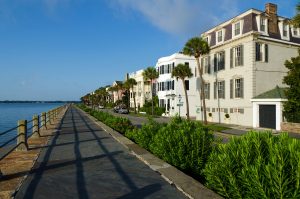
        Every time I step foot onto the East Battery and feel the breeze lift off of the Charleston Harbor, I can almost feel time stand still. As you walk along the shale, you find yourself walking between immaculate historic homes, and the edge of a Sea Wall; all the while, the road is lined with beautifully manicured Palmetto trees. The antebellum homes that overlook the harbor are magnificent in their stature and regal in their elegance. One could only dream of owning a home of such grandeur. Something only reserved for the social elite. Nonetheless, being in the mere presence of these homes, you feel slightly aristocratic.

        As you near the corner of The Battery, you will find a beautiful park filled with breathtaking moss-draped oak trees and civil war monuments. Some consider this park a part of the battery, but it is formally known as White Point Garden. This park to me serves as the perfect kind of place to have a picnic, read a book, or hang around in your hammock. Not to mention, you can see even more of the breathtaking homes that line South Battery through the trees.

       Make sure to take a moment and stand still, and look out over the Charleston Harbor. On any given sunny day you may find dozens, or even hundreds of sailboats wrestling with the wind to make their way across the sometimes choppy water. Both Fort Sumter and Fort Moultrie are visible from the battery as well.

        If you want to make the best out of your trip and are someone who loves history, it is well worth the time to take a ride in one of the cities horse-drawn carriage tours. The tour guide will be able to tell you more about the history of the city than I could ever begin to. You will learn intriguing facts about the historic buildings and homes that make Charleston so important.

       Charleston is the kind of place that goes with you whenever you leave, and it calls you back when the weather gets warm. So this spring, as the weather begins to warm up, make sure to take a day trip down and visit Charleston. You’re sure to find something new to discover each time you visit the Holy City.


    Zach Hughes resides in Florence with his wife Alexis and their newborn son Christopher. Zach is a local entrepreneur and has spent most of his time working around the automotive industry. In his spare time, Zach enjoys discovering South Carolina and dabbling in journalism.

  • Congaree National Park – Forest of Champions

    Congaree National Park – Forest of Champions

    story by Zach Hughes

        There came a time in which men began to discover that the constant progress of civilization and industry would soon consume the last remaining pieces of natural untouched wilderness. Without the protection of those that saw these lands as something worth saving, many of the natural wonders we get to enjoy today could have very well been destroyed.   

        South Carolina is no stranger to this dilemma, having been home to a local save-the-trees movement. Thanks to their efforts, an area of ancient hardwood trees next to the Congaree River was put under national protection. It could have very easily been logged like millions of other acres of land in the US.   

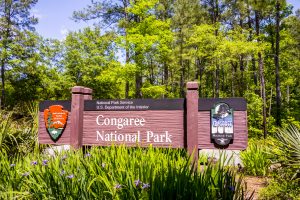
        Congaree National Park is one of the last remaining and the largest sections of old-growth bottomland hardwood forests in the United States. Even though by most it is considered a swamp, it is more or less known as a floodplain of the Congaree River. The sprawling 26,276 acres is home to many National Record Height trees. At one point the Congaree National Park was considered the “Redwoods of the East”.

        As soon as you walk past the Visitors Center, you will find yourself on a boardwalk that descends into the canopy. You immediately encounter a variety of magnificent trees. When you take in their sheer magnitude, you will feel small in the grand scheme of time. It is hard to overlook the fact that you are in the presence of an ancient forest. Take this time to leisurely walk along the boardwalk and immerse yourself in the serene landscape.   

        If you stay straight at the first junction, the trail after that will transform into a wetland boardwalk with no railings. At this point, you are up close to the enormous Cypress trees and wetland floor. This is probably my favorite point within the park because of how close it takes you to the true nature of Congaree.

       Due to the biodiversity of Congaree, each season creates drastic changes to the feel and appearance of the entire ecosystem. In my opinion, the changes are the most evident along this wetland boardwalk. The ecosystem can transform into a flooded wetland or a soggy green scape filled with plants. This diversity is all the more reason to want to visit during different times of the year. Your experience will be filled with surprises each time.   

        If you decide to venture past the boardwalk and onto the river trail, make sure to wear a pair of boots you aren’t afraid to get muddy. I will mention, it is very important to stay on the designated trail. The area past the boardwalk is considered true backcountry and should be explored with caution. Fortunately, the trail has very frequent and hard to miss trail markers. The further you trek into the backcountry, the landscape will begin to transform into different types of foliage and many unique trees. You will encounter a bridge that passes over a small creek, but you are not quite at your destination. The biggest reason for wanting to take the river trail is that it will take you to the riverbanks of the Congaree.   

        As you near the river, you will notice that the atmosphere around you transforms from stagnant and unmoving to a crisp refreshing breeze. You know you are getting close at this point, even though you cannot see it. As you press on further through the trees you will be able to see the broad and fast-moving Congaree River. The vastness of the river in its untouched state will leave you speechless, and the refreshing breeze replenishes you with air you didn’t know you needed. The natural riverbank is like no other you have seen, being that it has in no way been modified to appease people. It is just the way that nature created it to be. No grassy areas to picnic on or park benches to rest. The edge of the river slopes into a drop off that has been carved away over the years. Make sure to spend some time along its edges before you make your way back to the boardwalk.   

        Now, this is the furthest I have made it into the park, but there are so many areas to explore, and many are inaccessible by ordinary means. One of the best ways to discover Congaree is by kayak or canoe.    

        If you are lucky enough to explore Congaree by way of paddling, you will get an even more up close and personal experience with the wetlands. Water blanketed by trees and leaves that curve through the untouched wilderness; you get a real glimpse into what it may have been like to be an ancient Native American tribe paddling through the wilderness.   

       Considered one of the most biodiverse areas known in the country, it is constantly transforming and changing with its surroundings. It is very much alive as it breathes in life from the surrounding area. Unlike many other National Parks, Congaree is still interwoven with the surrounding biosphere. Making It one of the most unique and ever-changing ecosystems.  It is with great appreciation that the heart of South Carolina is home to such a thriving a diverse wilderness, and I’m very thankful for those that saw it worth saving.   

    cypress forest and swamp of Congaree National Park in South Carolina


    Congaree National Park


    Zach Hughes resides in Florence with his wife Alexis and their son. Zach has built his career around the car industry, having owned his own shop, and now working at the local automotive auction Manheim Darlington. In his spare time, Zach enjoys discovering South Carolina and dabbling in journalism.”


  • Learning Experiences through Travel with GSSM Students

    Learning Experiences through Travel with GSSM Students

        For three weeks before the second semester begins, students at The South Carolina Governor’s School for Science and Mathematics (GSSM) participate in a “mini-mester”, or January Interim, where they focus on one elective course. Interim classes are a great way for students to ease into the new year, and the wide variety of course offerings allows students to tap into undiscovered talents and explore new hobbies. Several courses include travel, nationally or internationally, and field experiences. In years past, groups have visited places like Silicon Valley, Peru, South America, and the Galapagos Islands. The entire student body has the choice of the class and signs up the summer before school starts.   

        Course topics are diverse and include science, technology, art, music, and drama. Interim courses are taught by members of the GSSM faculty, along with visiting professors from South Carolina colleges and universities.


    “I think that traveling is an important experience for young people because its how they can learn about the world from their own perspective instead of other people’s stories and accounts. I think you gain respect for other cultures as well.”  -Thandikwe Nixon, Charleston, SC


    “My favorite part of my trip, by far, was visiting the Paracas Natural Reserve. I have never been to a desert before, and it was more beautiful than I could have imagined. The landscape was absolutely captivating, and I could see for miles. The colors were also amazing, the shades of the dunes ranged from the typical tan to burgundy. It was such a unique place, with a dessert that leads right up to the ocean. The cliffs that stood high over the rolling water provided a juxtaposition that was simply breathtaking. I am so thankful that I was able to visit this hidden gem.” – Hollis Smith, Clover, SC


    “Travel is such an incredible opportunity and privilege for young people and I would like to point out that there are several educational foundations that support giving these opportunities to students who couldn’t otherwise afford it. First, the GSSM Foundation supports our students taking trips; second, EF Tours Foundation has supported students being able to travel for decades and even organizes at-trip costs for schools to travel as cheaply as possible. Third, there is a charity called FLYTE that supports entire groups of children from project areas to travel abroad. The reason I mention these foundations is that they recognize that travel can broaden a student’s mind and contribute to their educational journey in a way no other experience can, giving them a priceless opportunity they will remember for years to come. All of these charitable efforts were originated by people who had life-changing travel experiences themselves, showing you just how important travel is to education.” – William Hobbs, Lexington, SC


  • The 101 on Wine

    The 101 on Wine

    story by Bryan Holt

        When you’re walking into a store like Micky Finn’s to purchase a bottle of wine, it can be a little overwhelming. There are times when I want to personally pull my hair out and scream with all the wine selections that are out there; I’m partially responsible for this madness. With wines ranging in price from $2.99 to over $200.00, it can be daunting to figure out what you’d like to drink for the evening. Many people have the assumption that you have to pay more (twenty-five dollars or higher) for a decent bottle of wine – that only the great Cabernets start at fifty dollars or higher. Sometimes they are right but a lot of times they are missing the boat with awesome wines in the $10.99-$15.99 price range.

        I became a wine buyer back in 2005. This was the height of the Australian wine boom, Yellow Tail and Lindeman’s were producing wines that retailed for under $5.00 and Fred Franzia (California) came up with the infamous Two Buck Chuck wines. So back then you either had good wines with a retail higher than $25.00 or “eh” wines with a price under $6. In that same timeframe, a lot of wineries and vineyards were noticing one thing. Do we want to sell one bottle at $45 or three bottles at the same retail? Domestically speaking one of the first wineries, that I can remember, to address this question was Duckhorn Vineyards.

        Duckhorn Vineyards was founded in 1976 in Napa Valley, California with their first case production coming out in 1978. Duckhorn quickly became one of the Valley’s premier wineries and received both a domestic and international following. Depending on which grape varietal you purchase (Cabernet, Chardonnay, Merlot or Pinot Noir) and which vineyard site the juice comes from (St Helena, Howell Mt or Stag’s Leap) you can expect that price to start at roughly thirty dollars and going to eighty or higher. Then the epiphany came around 2005.

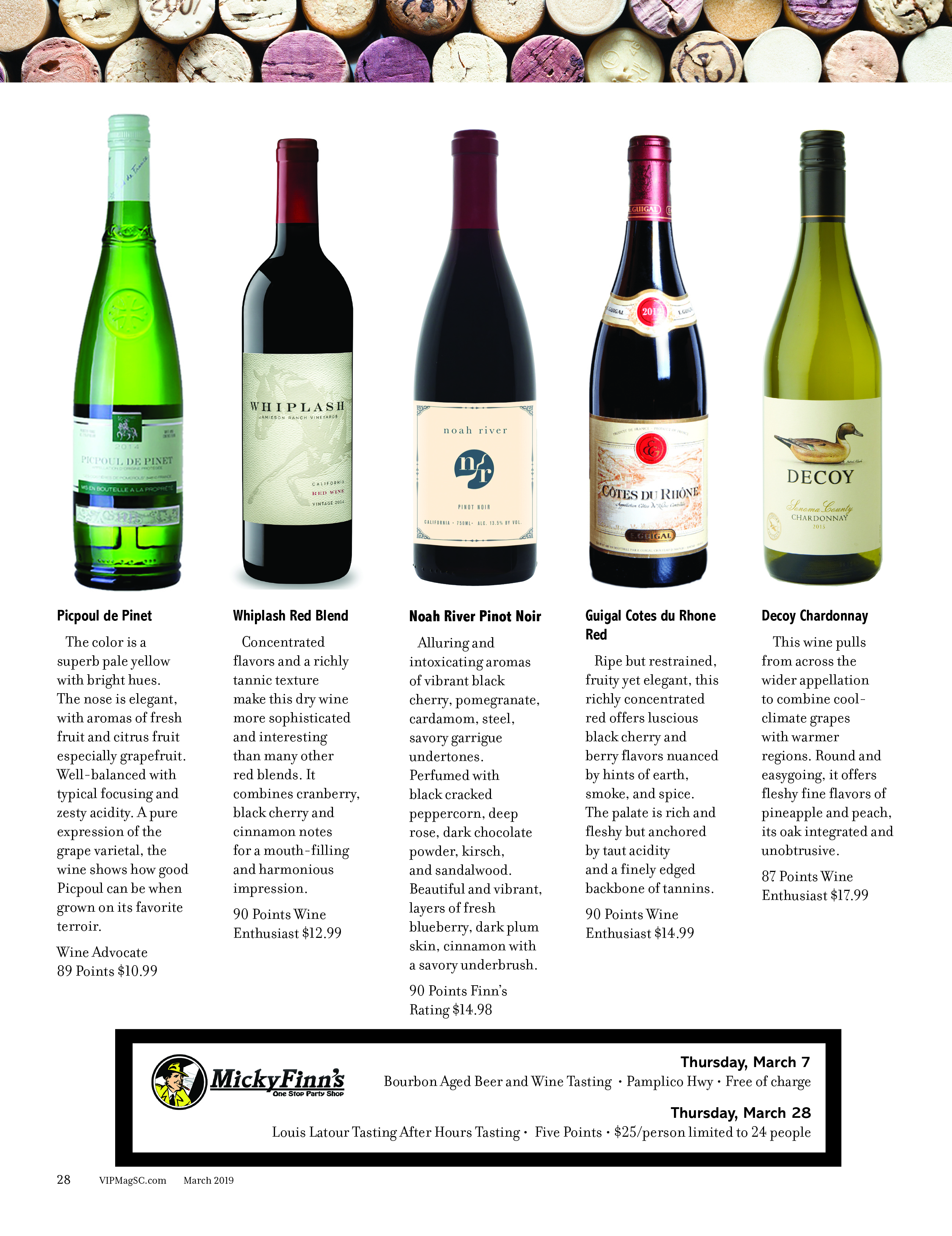
        Decoy was first made in 1985 as a Napa Valley red blend. Its grapes came from St Helena and were consistently produced as a Napa Valley wine for the next few decades. With the introduction of a new label in 2005 and the price being in the mid to high twenties, Decoy was beginning to gain momentum in the wine industry. Seeing this growth, and placing a lot of the credit to the growth with its competitive retail price, Decoy became more than just a second label for Duckhorn and in 2008 became its own focused winery with an expanded wine portfolio; including Cabernet Sauvignon, Chardonnay, Merlot, Zinfandel and Sauvignon Blanc sourced from Sonoma County. All of our Decoy wines are competitively priced at $17.99.

        So all of this boring history and rambling comes down to one simple statement: “Please don’t base your opinion of a wine with the retail you see.” I guarantee that you can come into our stores and find a wine priced at $12.99 that drinks like a $20 bottle. In fact, there are so many wines to choose from in this range, hundreds actually. The market has sustained these prices efficiently, crashes and recessions haven’t affected them at all. In fact, the only thing that may affect these wines and the supply of them in the market is the growth of Cannabis farms in California. A lot of wine and beverage companies are actually pulling up grapes in California to meet the demand for legalized Cannabis. Currently, Constellation Brands is discontinuing the production of Cooks Champagne, Clos du Bois, and Mark West in favor of Cannabis production.

        There are several wineries that do the same as Duckhorn, I just personally like Decoy and chose them as an example. Stretching from California to France, Italy, and Spain to Australia hundreds of wineries have second and third labels to get to the mid-tier prices for the everyday consumer.


    Bryan Holt and Gonzalo Guzman, head winemaker at Vina El Principal on a summer trip to Chile.


    550 Pamplico Hwy • Florence • 843.413.1183

    194 S Cashua Dr • Florence • 843.317.9463


  • The Shad are Running

    The Shad are Running

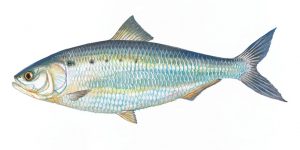
        The American Shad is a species of anadromous herring-like fish that can be found running up the Great Pee Dee River and Lynches River. It’s historically consumed by locals along the Atlantic coast. Like salmon, shad are born in freshwater, spend their life in saltwater, then travel back to freshwater to spawn. Fisherman look forward each spring to the shad run, the opportunity to catch a hen fish (female) and cook up the shad’s true delicacy – the shad roe.

        On March 23rd, Friends of the Revolutionary Rivers (FORevR), a group formed to protect and promote the SC Revolutionary Rivers National Recreation Trail located within the Pee Dee region, will host a limited number of people for the first annual Pee Dee Shad Roe-Deo at Venters Landing in Johnsonville. Local historians will educate attendees on the importance of shad dating back to when Native Americans roamed the area, to when Francis Marion took refuge in the swamps during the Revolutionary War, up until present time.

        Ben Ziegler, attorney and shad enthusiast, is excited to celebrate the indigenous dish, one that his family considered a traditional meal. “When I was a kid, my mother would serve shad roe on Sunday evenings,” said Ben. “Shad was fun to catch using a bow net and was my favorite thing to eat!” In addition to Ben, Dr. David Shields, food historian of the University of South Carolina, will be in attendance to give lively history lessons alongside Lynches River.

        Pickled, baked, fried or roasted, chefs at the event will give cooking demonstrations for fresh shad and roe caught by local commercial fishermen. As guests enjoy a shad and/or roe meal, live music by Hercules Farm will fill the air. Local Motive, a Florence brewery, brewed a special run that is specific to shad.


        The Shad Roe-Deo will begin at 2 pm and the cost is $75 per person. All proceeds benefit FORevR’s efforts to build platform campsites along Lynches River. To purchase tickets or for more information, please call 843-664-0330.


    All proceeds benefit Friends of the Revolutionary Rivers to build platform campsites along the SC Revolutionary Rivers National Recreation Trail on Lynches River. (Platform from Tar-Pamlico River Trail in NC.)