Category: Health + Beauty

  • Seasonal Allergies

    Seasonal Allergies

    story by Donna Tracy, Communication Coordinator, HopeHealth

        When the world turns yellow, you know allergy season is here. Ironically, the pine pollen that coats cars, lawns, and everything else, is not typically the culprit of the itchy eyes, sneezes, coughs, and general misery that allergy and asthma sufferers endure each spring. However, there are dozens of trees, grasses, and weeds that pollenate our air at the same time as the sticky, grainy, yellow pollen that blankets most of our region.

        It is these pollens that are the microscopic irritants that invade our respiratory system and turn a beautiful spring into more than just a headache.

        “Pollen can be carried great distances though the air, and being that pollen is very fine, it is easily inhaled as it comes in contact with our respiratory tract which includes the nose, mouth and  nasal passageways,” said Dr. Krista Kozacki, a primary care physician at the HopeHealth Medical Plaza in Florence.  They invade our airways and our body reacts by releasing  a chemical called histamine. Histamine is part of the body’s defense system and works to remove allergens from the areas affected.  “The job of the histamine is to help the body get rid of whatever is bothering it.  In this case the trigger is an allergen or “pollen,” she added.

        If that area is your nose, for example, the histamine makes your body produce more mucus to filter the allergens and prevent them from getting into your airway.  So the pollen is the trigger, but the body’s histamine response to eliminate or remove the trigger is what causes the nasal stuffiness, runny nose, and the itching of the eyes and nose, Dr. Kozacki explained. “Our immune system is beginning the battle against the pollen.”

        The severity of allergy symptoms varies. They can be mild, causing a few sniffles, itchy eyes, and a little discomfort. They can be debilitating, with severe reactions such as rashes, hives, low blood pressure, breathing trouble, asthma attacks, and even death.

        Allergens especially impact those with asthma or other upper respiratory conditions and can cause an increase in asthma symptoms. Asthma is the leading chronic disease in children, and, according to the Asthma and Allergy Foundation of America, more than 11.5 million people with asthma, including nearly 3 million children, had one or more asthma episodes or attacks in 2015. Recent statistics indicate that 53% of children with asthma will have an attack per year.

    Allergy Symptoms

    Nasal Congestion: Histamine create inflammation in your nose causing swelling and congestion. This can result in trouble breathing, especially when lying down. Congestion is often one of the first allergy symptoms to appear.

    Runny Nose: Mucus in your nose is normal, but histamine reactions to an allergen can increase mucus production and cause a runny nose.

    Sneezing: Sneezing helps remove irritants such as pollen and mold spores from your nose.

    Itchy nose and eyes: An itchy nose or itchy or watery eyes is histamine at work!


    Allergy treatment

    Avoid the Triggers: One of the best ways to treat allergies is to simply minimize exposure to them when possible.

    Wear a protective mask when gardening or doing yard work.

    Use HEPA (high-efficiency particulate air) filters in air conditioners to trap pollen spores and change them often.

    Wash your hair before going to bed to avoid pollen transfer to your pillowcase.

      Pay attention to pollen accounts: counts are typically higher on hot, windy, sunny days and lower on cool days without much wind.

    Treatment

       Your primary care doctor or allergist can recommend a variety of medications to improve your seasonal allergies. Some, including many approved for children, are available over-the-counter from your pharmacist. Options include:

      Saline nose spray – can be used throughout the day to help flush out pollen triggers in the nasal passageway.

      Eye drops – can help itchy eyes.

      Topical nasal sprays – these contain prescription medications called corticosteroids that help reduce the inflammation in the lining of the nose and are typically used daily during allergy season.

      Oral antihistamines – available over the counter in generic (loratadine) and name-brand versions. Check with your primary care provider to make sure the medication will not interfere with other medical conditions that you have. Be aware that over-the-counter allergy options often include a decongestant that may elevate blood pressure and heart rate.

      Immunotherapy (allergy shots) – tiny amounts of the allergen are injected over time to stimulate the immune system.


    360 North Irby St., Florence  | 843.667.9414 | hope-health.org

  • Give your heart a Valentine; Check your heart’s health

    Give your heart a Valentine; Check your heart’s health

    story by Donna Tracy, Communication Coordinator, HopeHealth

        Our hearts fill with joy when we are celebrating Valentine’s Day with our loved ones but is your heart filled with something more? This year, give your heart a Valentine gift and take a moment to reflect on its health.

        Many factors can have an impact on your heart. Cholesterol levels, blood sugar levels, hypertension, your weight, physical activity, and more all contribute to how healthy your heart is and being aware of their impact is a great way to take control of your health.

        Cholesterol and blood sugar levels can be greatly influenced by diet, and high levels of either increase the risk of developing heart disease. Cholesterol, a waxy, fat-like substance, can build up in arteries, often without symptoms. High blood sugar levels can damage blood vessels over time. Either can lead to heart disease and strokes.

        Choosing healthy meal and snack options that are low in calories, fat, and sugar, and high in fiber and protein, can help keep cholesterol and blood sugar levels under control and prevent heart disease.

        Reducing hypertension can also positively impact your heart health. Better known as high blood pressure, hypertension affects about one in three South Carolinians and is the leading cause of strokes in the US. If hypertension is not managed, your heart is at risk of stroke, heart enlargement, heart failure, and heart arrhythmias like atrial fibrillation and aneurisms.

        Blood pressure is composed of two numbers; the upper (systolic) number which indicates how much pressure blood exerts against artery walls as the heart beats, and the lower (diastolic) number which measures how much pressure blood exerts between heartbeats. Normal blood pressure should read 120/80 or less. Consistent readings above 140/90 indicate hypertension.

        Many risk factors for hypertension, such as age, family history, and race, cannot be changed by our own actions. However, there are many ways to mitigate other risks, including:

    • Quitting smoking if you smoke and avoid second-hand smoke
    • Getting your lipids – that’s your cholesterol and triglycerides levels – checked to make sure they are under control
    • Addressing sleep apnea issues. Untreated sleep apnea can stress the heart
    • Taking medications as prescribed by your doctor
    • Incorporating more plant-based proteins into your diet

        Other factors impacting your heart include being overweight and physically inactive. Knowing your BMI, or body mass index, can help you determine if your weight is considered to be a healthy level. A BMI of less than 18.5 is typically considered underweight, 18.5-24.9 is normal or healthy, 25.0-29.9 overweight, and 30.0 or higher is considered obese.

        You are your heart’s best advocate and knowing your risk factors is key to safeguarding your health. Make an appointment with your primary care provider today for your annual wellness check and give your heart the best Valentine a heart can get.

    360 North Irby St.  Florence  |  843.667.9414 | hope-health.org

  • The Home Field Advantage of a Primary Care Home

    The Home Field Advantage of a Primary Care Home

        Health care is just like football. Even those who work hard at staying healthy will fumble or get tackled. Everyone gets sick at some point. Flu, a common cold, stomach bugs – they all make the rounds at this time of year. While a trip to an urgent care clinic might help ease the symptoms, a primary care home is typically your better option for long-term healthy outcomes. Patients who have a primary care provider have overall lower healthcare costs and higher satisfaction rates.

        The advantages of a primary care home are much like playing football in your home stadium. You get to know your provider and your care team, and, more importantly, your providers get to know you and your health history. Continuous care at a primary care home builds a long-term relationship between you and your provider that can help reveal ongoing health issues that might otherwise go unrecognized at a single doctor’s office visit. Such relationships lead to better communications and disease management, less risk of complications, fewer hospitalizations, and fewer visits to an emergency department. 

        A primary care home is more than just having the name of your doctor at the tip of your tongue. It is where your primary care provider plays quarterback to a care team that coordinates your health care beyond treating a sudden case of sniffles. It is where wellness examinations, preventive services, chronic diseases management and acute illness treatments are first downs in your health care playbook. It is where you get to score touchdowns on the health goals in your life.

        In a primary care home, your provider also acts as a coach, helping you navigate through the game of health. The health care industry is getting more complicated. With advances in technology, improvements in medical therapies, and a convoluted system of insurance and regulatory issues, it is essential to have a primary care team that knows you. 

        Offense is obviously important as you move toward the goals of chronic disease management. Managing care on a continuum and in context of the individual patient is a more effective, efficient, and holistic approach to patient care. Treatment of acute illnesses also requires knowledge of your overall health and medical conditions. Defense also plays a key role in healthcare wins! Preventive health services, immunizations, wellness exams, and screening tests are all critical in maintaining good health.

        A primary care home also helps maximize your health-care dollars with significant savings over unnecessary emergency department visits. Urgent Care Centers and Emergency Departments do serve a necessary purpose. They are appropriate for acute, potentially serious conditions that are not appropriate for an office setting, or may need urgent treatment when your provider’s office may not be accessible. How do you know when should you go to your primary care provider or the emergency department? 

    Primary Care Office:

    • persistent pain or condition
    • Minor aches and pains
    • Arthritis
    • Cold or flu-like symptoms
    • Earaches
    • Minor burns or cuts
    • Minor dog or animal bites
    • Persistent fever
    • Skin rashes
    • Sprains
    • Symptoms of sexually transmitted infections
    • Sudden/severe pain

    Emergency Department:

    • Coughing up or vomiting blood
    • Difficulty speaking
    • Fainting or sudden weakness
    • Severe or persistent vomiting or diarrhea
    • Shortness of breath
    • Sudden change in or loss of vision
    • Sudden chest pain or pressure
    • Sudden confusion or change in mental state
    • Suicidal feelings
    • Uncontrolled bleeding

        As you enjoy (or suffer through) the bowl games this time of year, you may be contemplating some New Year’s Resolutions. These almost always include some impossible health goal – like losing 100 pounds or exercising six hours a day. Why not make a resolution that is truly beneficial to your health, and extremely easy to keep – make an appointment with your primary care provider! Happy New Year!

    Story by Dr. Edward Behling, Chief Medical Officer, HopeHealth

    360 North Irby St.  Florence | 843.667.9414 | hope-health.org

  • A Health Benefit for the Body, Mind & Mental State

    A Health Benefit for the Body, Mind & Mental State

    story by Jordan Pupa

    While the holiday season is full of good cheer and good company, it can also be a very stressful time. Lucky for us, Serenity Touch in downtown Lake City specializes in massage treatments, the perfect tool for staying healthy in the new year. Sheriko Jernigan’s journey with Serenity Touch began 2013 when she took a chance and rented a room out of S0-Lace Salon. The opportunity was a step in the right direction for building her own business, which she opened in 2017.

    Sheriko was inspired to get into massage after her husband’s back surgery. He complimented her massages and suggested she look into furthering her education. In 2010 she attended and completed Avalon School of Massage. Two years later she obtained her SC State license to become a massage therapist. In October of 2017 Serenity Touch opened its doors at 106 W. Main St. in downtown Lake City. Serenity Touch offers massage therapy, spa treatments, massage packages, and memberships. Massage treatments include therapeutic, swedish, cupping, hot stone, deep tissue, and sports massage. Spa treatments include facials, body scrubs, paraffin wax wrap, body wrap, and ear candling. 

    Sheriko explains how massages are a great health benefit for the body, mind and mental state. Benefits include improvement of blood circulation, relaxation of the muscles, stress and anxiety reduction, sleep improvement, and the release of endorphins and toxins. Additionally, massages can help build enzymes and lower blood pressure. For those of you who have chosen self-care as your New Year’s resolution, this may be what you need. In order to get the most out of massage treatments, Sheriko suggests scheduling regular sessions, weekly or bi-weekly. Of course, getting a massage anytime within a month is better than no time at all!

    The thought of getting a massage can make some people uncomfortable or nervous. Sheriko’s advice is to look for highly recommended massage therapists by reading online reviews and to visit different locations to get a feel for the therapist and the environment. “A welcoming, relaxing, and rejuvenating environment helps people to feel more comfortable and willing to give it a try,” says Sheriko. “Use your instincts. Always ask questions and if willing, give different therapists a try to see who suits you best.” Sheriko strives as a business owner and professional to make every person that calls or walks through her door to feel comfortable and safe.

    Overall, massage treatment is not just a luxury. Massages are a major health benefit and should be part of everyone’s overall wellness plan. “As a massage therapist, I take great joy in helping people feel better,” explains Sheriko. “When a client comes out of my room with a smile on their face, it makes me feel good that I helped them. I thank God, my family, and my clients for all the support and love on my journey.” If you’re interested in learning more about massage therapy, Sheriko is happy to help. Do your body a favor and schedule a session today!

    Apart from being a business owner, Sheriko is also a wife to a loving and supporting husband, Chris, and a mother of two wonderful children, Christopher (14yrs) & Dakota (12yrs).

    Serenity Touch | 106 W. Main St., Lake City | 843-374-8898

    serenitytouchlc@yahoo.com

    www.serenitytouch.com

    Facebook: @serenitytouchlc

  • Resolutions for Your Skin

    Resolutions for Your Skin

    Each year, we all make resolutions to better ourselves. Let this new year be a new start for your skin, too. Here is a list to help you reach your skin care goals and obtain that glowing healthy complexion! 

    1.) Get to know your skin and choose the correct products to address your specific concerns. If you have trouble deciding which products are best for your skin and are overwhelmed with all of the options, a licensed aesthetician or a skin care specialist can help you. The appropriate skin care regimen and consistency are crucial for reaching your skin goals. 

    2.) Wear sunscreen everyday!!!! It doesn’t matter what   time of year it is, what the weather is, or what your plans are for the day, a sunscreen that protects against both UVA and UVB rays is a must! More than 90% of aging is caused by sun exposure, This includes tanning beds! Sunscreen is your #1 anti aging product. Look for a lightweight formula with a spf of at least 30. I prefer hydrating ones containg zinc oxide. 

    3.) Incorporate an antioxidant serum like Vitamin C and a retinoid into your skincare routine. The most common skincare antioxidant is Vitamin C which benefits the skin by evening out skin tone, creating a shield against environmental aggressors, and improving hydration. Tretinoins and retinols stimulate collegen production and cell turnover which aid in clearing up acne and minimizing fine lines and discoloration. 

    4.) Don’t forget your neck, declotte, and hands. The aging process shows up here as well. Whatever you do to your face, do to your neck and chest and the back of your hands. There are also many products and procedures that are specefically used to treat these body parts. 

    5.) Skip the sugar (and dairy if acne is a concern). Diet also effects our skin. Sugar is bad for our waistline and our skin! It contributes to both aging and acne. Too much sugar leads to inflammation which causes the breakdown of collagen and elastin, resulting in wrinkles and sagging. Sugar stimulates the production of certain pimple inducing hormones, too. Dairy products are also acne producing culprits. 

    6.) Stay hydrated. A lack of hydration contributes to the look and feel of our skin. Our skin cells, like all of the cells in our body need water to function properly. If these cells are dehydrated it can present itself as dry, flaky, and tight skin with more noticeable wrinkles.Water also helps our body to flush itself of toxins. Not drinking enough water can lead to a build up of harmful substances that can cause breakouts. 

    7.) Exercise on a regular basis. Exercise appears on most everyones resolution list for obvious reasons, but it positively effects our skin, too. It stimulates cell regeneration and helps remove those pesky toxins. Good exercises to try are strength training like yoga, barre, pilates, and TRX and cardio like jogging on shock absorbing surfaces, swimming, cycling, and HIIT training. 

    8.) Get plenty of sleep! Nighttime is when our body is in repair and renewal mode.It gets rid of toxins and produces collagen and elastin to keep breakouts and wrinkles away. At night, our body also increases blood flow leading to a healthy glow. Lack of sleep leads to dull skin, wrinkles, puffiness, and dark under-eye circles. Remember that it is never a compliment when someone says that you look tired 

    9.) Always wash your face before you go to bed! Help your skin rejuvenate itself by removing the dirt and grime of the day. Clean skin leads to healthy skin. 

    10.) Realize the importance of in-office treatments. There are many non surgical options to address all of your skin concerns some with instant results and no downtime. This is where a skin expert can customize treatments and procedures for your skin. Together you can achieve lasting, glowing results. 

    Story by Brittany Reames, Licensed Esthetician

    Genesis Cosmetic Laser Center • 1273 Celebration Blvd, Florence • 843-669-2220

  • Fitness Forum: Strength, Endurance & Nutrition

    Fitness Forum: Strength, Endurance & Nutrition

    3 Terms That Guide You Towards Good Health & Wellness

    story by Brock McCallister

    Firefighter, City of Florence & Head Trainer, Fitness Forum


        There are three terms that are not exclusive to elite athletes, but often are ones that only get used in a sports setting. They are terms that can and should be used to describe what each one of us should be focusing on – strength, endurance and nutrition.

        No matter if you are someone who works at a desk or a firefighter pulling someone from a burning building, if you seek a healthy lifestyle it will revolve around these three terms. Throughout life there will always be heavy objects to move, something that will make you stop and catch your breath, and illnesses that will challenge your overall health, so if we can manage these three things we will have a pretty good grasp of health and wellness.

        First, let’s talk about strength. Strength by definition is, “our power to resist force.” This may seem very generic, but in other words its our ability to move or stop objects and as we age our ability to develop strength diminishes. In order to develop strength we must, over time, increase the loads that we try to move by pulling, pushing, dragging, and/or holding. Some movements that resemble these, dead-lifting (pulling), squatting (pushing), bench or shoulder pressing (pushing), and dragging. Implementing these exercises with gradually increasing loads will improve your strength drastically and have you ever heard anyone say, “I really wish a wasn’t this strong!”

        Next, endurance defined as “our ability to sustain a prolonged stressful effort or activity.” Now a good example of this would be running a marathon, but it is not exclusive to runners. Playing with your grand kids all day, doing work in the yard, and walking the dogs all require endurance. The demands may be different, but they still reflect on our ability to endure working or moving for an extended period of time. Now how do we work on this? Simple, just like strength training you have to gradually increase either the amount of work in a given time frame or increase the amount of time that you do an activity. An example of this would be, decreasing your mile run time from ten minutes to seven minutes or increasing the distance you run in ten minutes from one mile to one and a half miles. Increasing your endurance can help decrease your risk of developing high blood pressure, heart disease, and diabetes as well as boost your immune system to get your through flu season!

        Last and most important, nutrition. Without good Nutrition you will hinder both your ability to increase your strength and endurance! Now, everyone seems to have their go to “diet” when they want to drop a few pounds before summer, but for the most part every successful “diet” will have some of the same components, real food and no added sugar. But what does that even mean? Real food would be the stuff that has an expiration date like bananas or meat from the market and some examples of added sugar are soda or candy. Some of the most simple advice for trying to eat healthier would be to stay on the outside of the grocery store, no fast food, and no sugary drinks like soda or sweet tea. As Greg Glassman, Founder of CrossFit says, “ Eat meats and vegetables, nuts and seeds, some fruit, little starch and NO SUGAR!”

        In closing, you can read all of the health and fitness magazines that you want, but when in comes down to it, if you want to have the ability to handle most things that life throws at you, just remember to lift heavy (strength), move fast (endurance), and eat clean (nutrition).


    120 East Elm Street, Florence | 843-661-3800 | bmccallister@fitnessforumonline.com

    No Join Fee during the month of January at Fitness Forum. Also the start of the Biggest Loser Competition. To learn more, visit www.fitnessforumonline.com!


  • Staying Fit

    Staying Fit

    Whitney Robertson Talks Fitness

    story by Jordan Pupa

       Whitney Robertson has been a certified personal trainer for three years and was recently certified in nutrition. She is currently a personal trainer at the Hartsville YMCA.

       “My first true love is the gym. That is where I basically spend my whole day, six days a week. I gained a love for fitness about four years ago when I went through my own fitness journey, losing a total of fifty pounds. I’m glad I had that experience because it gives me a chance to really connect with my clients and understand their struggles and fears. I love seeing my clients gain confidence in the gym. I always have ladies that are super excited about gaining some muscle and definition. The gym doesn’t have to be a scary place, and that is one of my main goals as a trainer, to help people feel comfortable.”

    Tips & Tricks for Staying on Track This Holiday Season

    • Plan Thanksgiving & Christmas dinner as your cheat meal- NOT a cheat day!

    • If you can help it, do not keep excess treats in your house.

    • Do not keep “trigger foods” in your house. (These are foods where you can’t have just one.)

    • Get your workouts in at the beginning of the week so you can enjoy the weekend with family.

    • Keep lots of healthy snacks around, such as apples or mixed nuts.

    • If you plan on drinking alcohol, try a Vodka Selzer Water instead of sugary beverages.

    • Do not go to family get-togethers or parties starving.

    • If bringing a dish to share, spring for a healthy dish that you can also eat.

    • When eating out, pick healthy dishes that aren’t loaded with cheese, sodium, and fatty dressings. (You can always modify some items on a menu. For example, on a salad, ask for the cheese and dressing on the side.) 

    • If your traveling out of town, bring your own snacks, sauces, or pre-prepped meals. Give yourself the opportunity to choose a healthier option.

    At Home Workouts: (Required equipment: dumbells)

    LEG WORKOUT: Repeat Exercise 4 Times

      Squat Thrusters- 10 reps

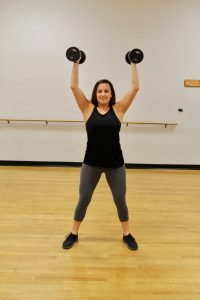
    Accelerate when nearing top of squat, drive dumbbells up off shoulders, and throw weight overhead by extending arms upward. Immediately lower weight by bending arms. As weight descends, bend legs, and catch dumbbells in front of shoulders as knees are bending at approximately 90°.

      Walking Lunges- 20 total reps

    Begin standing with your feet shoulder width apart and dumbbells at your sides. Step forward with one leg, flexing the knees to drop your hips. Descend until your rear knee nearly touches the ground. Your posture should remain upright, and your front knee should stay above the front foot. (Don’t ever let knee go above your front toes.)

      Calf Raises- 20 reps

    Standing with heavier set of dumbbells at your sides, raise the backs of your heels off the ground.

    Sumo Dumbbell Squats- 15 reps

    Grab a heavy dumbbell and hold an end with each hand at arm’s length in front of your waist. Set your feet about twice your shoulder width apart, your toes turned out slightly. Lower your body as far as you can by pushing your hips back and bending your knees.


    Quick High Intensity Interval Workout: (no dumbells required)

    4 total rounds with minimum rest

      High Knees- 24 total reps

      Squat Jumps- 10 reps

      Jumping Jacks- 20 reps

    • 30 second rest

      Mountain Climbers- 20 total reps

      Crunches- 15 reps

      Leg Raises- 15 reps

    At Home Workout: (Required Equipment: dumbells)

    4 rounds with 30 Second rest in between each set

      Over Head Triceps Extensions- 12 reps

      Bent Over Together Dumbbell Rows- 12 reps

      Alternating Dumbbell Curls- 12 reps

      Lying Chest Press with Dumbbells- 12 reps

      Shoulder Dumbbell Press- 12 reps


    Instagram: whitney_fitxo

    Facebook: Whitney Nicole Robertson

    704-830-4838 | whitneyyynicole1415@gmail.com

  • Lung Cancer Screening

    Lung Cancer Screening

    The Key to Prevention & Detection

    story by C. Eric Wooten, M.D., Carolinas Hospital

        Lung cancer is a disease in which cells arise in the lungs and begin to grow out of control. If undetected and untreated, lung cancer can spread to lymph nodes and other organs. It can be a devastating disease and remains the number one cause of cancer mortality for both men and women in the United States. Recent advances in lung cancer prevention, early detection and treatment are improving survival. 

    Risk

        Smoking can cause cancer almost anywhere in the body. It’s also the number one risk factor to cause lung cancer and is linked to 80-90% of lung cancer deaths. Other tobacco products such as cigars and pipes also increase risk. Quitting smoking at any age can lower the risk of lung cancer, COPD, heart disease and many other diseases. Secondhand smoke can be just as dangerous and is known to contribute to sudden infant death syndrome (SIDS), respiratory infections, asthma attacks, heart disease, stroke and lung cancer. 

        One of the leading causes according to the American Lung Association (ALA) of lung cancer in non-smokers is radon gas and has been found in homes all across the US and the world. Radon is a naturally occurring, colorless and odorless gas that comes up from the ground and gets trapped in houses or structures. It is estimated that 1 in 15 houses in the US has high radon levels and testing your home is recommended by the Environmental Protection Agency. Other exposures such as asbestos and a family history of lung cancer also contribute. 

    Prevention & Detection

        Public education about the link between smoking and lung cancer has reduced the incidence of lung cancer in the US. Radon testing your home is also an import preventative measure. Other important ways to lower your risk of developing lung cancer is to avoid secondhand smoke, exercise, eating healthier foods and limiting alcohol intake. The single best preventative method to avoid lung cancer is to quit smoking.

        One of the tools used for early detection is a low-dose computed tomography (CT) scan. Many symptoms of lung cancer are not specific to the disease so it can progress to advanced stages before detection. A recent method of screening dramatically improved survival in current and former smokers, detecting the disease early when the chance of cure is greatest. This method saved 1 in 5 people diagnosed with lung cancer based off comparison to a control group. The screening also has shown to reduce the overall risk of death from lung cancer by almost 7%. 

        To put this into perspective, lung cancer screening exceeds survival benefit of screening for prostate, breast or colon cancer. As an Oncologist, it is exciting to imagine the benefit of yearly exams throughout a patient’s life.

    Yearly screening is recommended for those meeting the following criteria:

      Have a history of smoking 30 pack years* or more (A pack year is smoking an average of one pack per day, per year.)

      Smoke now or have quit within the past 15 years

      Are between 55 and 80 years old.

        Unfortunately, despite the overwhelming benefit of screening, rates remain very low. Research presented at this year’s American Society of Clinical Oncology meeting revealed that in 2016 only 2% of a 7.6 million eligible population were screened in the US. For many, screening simply hasn’t become a regular practice or a successful early detection program isn’t available to either physicians or patients. 

        At Carolinas Hospital System, our administrators, Oncologists and Pulmonologists have come together to create a screening protocol and lung clinic for primary providers to easily refer patients for treatment and follow-up. 

        The Pee Dee region has shown a high rate of smoking and lung cancer. Raising public awareness about the importance of screening can potentially save many lives.

        If you, or someone you know meets the criteria, encourage them to contact their primary care provider or call Carolinas Hospital System Lung Nodule Clinic (843) 673-7529. Screening is covered by most insurance providers. 

    Dr. C. Eric Wooten is the Medical Director of Radiation Oncology at Carolinas Hospital System. He is board certified in radiation oncology. For more information call Carolinas Hospital System Radiation Oncology at (843) 674-2470 or go to CarolinasHospital.com.

    If you, or someone you know meets the criteria, encourage them to contact their primary care provider or call Carolinas Hospital System Lung Nodule Clinic (843) 673-7529. Screening is covered by most insurance providers. 

  • World AIDS Day

    World AIDS Day

    Did You Know?

    story by Donna Tracy, Communication Coordinator, HopeHealth

        More than three decades have passed since AIDS first captured global attention and put a name to the epidemic that terrified communities. No one knew what was causing AIDS. No one knew how it was transmitted. Task forces set out to determine risk factors. Specialized treatment clinics opened. Congressional hearings were held. Legislation for research was drafted. And people continued to die.

        In May 1983, researchers discovered the human immunodeficiency virus, or HIV, that destroys immune cells, known as CD4 T lymphocytes or CD4 cells. Healthy individuals typically have 500 to 1,600 of these cells in a single milliliter of blood. Below 200, the HIV infection has progressed to AIDS. At this point, the virus has so weakened the body that opportunistic infections and cancers can rapidly take hold.

        An AIDS diagnosis in the 1980s was a prognosis for death. Available treatments were harsh on the body and required a rigid regimen that included a minimum of 18 pills per day. For many, it also meant rejection from and abandonment by their communities and families.

        Today, much has changed, both in prognosis of the disease and in treatment, and an individual diagnosed with HIV and in compliance with their treatment plan can expect to live a full, typical life. The development of rapid HIV testing allows for fast, accurate HIV-status test results without a specialized clinical setting, and improvements in medicine has reduced treatments plans to a single pill a day. These pills are a combination of three medicines from more than 20 drugs, including antiretroviral (ARV) drugs, in about eight classes. Each attacks the HIV virus in different ways and the specific combinations prescribed to an individual are based on a genosure test that determines their specific HIV strain’s drug resistance.

        Even though treatment for HIV/AIDS has come so far, access and awareness remain hurdles for many communities. To combat the fear and stigma surrounding HIV and AIDS, World AIDS Day was established in 1988 with a three-fold goal: to unite communities, to celebrate and support people living with HIV/AIDS, and to honor the more than 35 million people who have lost their lives to the disease. World AIDS Day is held Dec. 1 each year to bring awareness about the disease and HopeHealth commemorates the day with the annual AIDSWalk in Florence.

        HopeHealth was established in 1991 as a grass-roots support group to help those diagnosed with HIV/AIDS and combat the fear and stigma surrounding the disease. HopeHealth continues to organize awareness events to increase the dialogue about HIV and AIDS, decrease stigma, and provide support to individuals living with the disease. Our Infectious Diseases Department works closely with our community health programs to allow for coordinated care across specialties, including pain management, substance abuse, dental care, mental health, and primary care.

        Open conversation on the HIV epidemic still has a long way to go, especially in southern states, which, according to the CDC, have the highest number of people living with HIV and account for 44 percent of all people living with HIV in the US. Nationwide, more than 1.2 million in the US are living with HIV infection and, of those, one in eight (150,000) do not know they have the virus.


    The fastest growing population rates for HIV infection is young men having sex with men, and college age kids.

      HIV has claimed more than 35 million lives globally since 1981.

      In 2015, 1.1 million people died from HIV-related causes globally.

      There were approximately 36.7 million people living with HIV at the end of 2015.

      2.1 million people were newly infected with HIV in 2015 globally.

      There is no cure for HIV infection. Effective antiretroviral (ARV) drugs can control the virus and help prevent transmission.

      With effective treatment, people with HIV can enjoy healthy, productive lives.

      Global estimates indicate only 54% of people with HIV know their status.

      Between 2000 and 2015, rates of new HIV infections fell by 35%, and AIDS-related deaths fell by 28%.

      Expanding ARV to all people living with HIV and expanding prevention choices can help avert 21 million AIDS-related deaths and 28 million new infections by 2030.

      In South Carolina, 20.7 people per 100,000 are living with HIV and the lifetime risk of being diagnosed with HIV ranks 10th in the nation

      Columbia, South Carolina, ranked 13th in the nation for highest infection rates per capita

  • Avoid Underage Drinking

    Avoid Underage Drinking

    Keys to an Incident-Free Holiday

    story by Circle Park Behavioral Services

        The Holiday Season is a busy time for many adults with family gatherings, social events, celebrations and traditional festivities. According to Nicole Cogdell-Quick, a licensed clinical counselor with Circle Park Behavioral Services, it is also a particularly important time to focus on the safety of their teens and even pre-teens. “The holidays can be an extremely challenging time as youth are faced with difficult choices in how to safely and legally enjoy the holidays with their friends. They will have more social opportunities and activities during the holidays, many away from the supervision of their parents. It is important during this busy time to take a time out with them and discuss your expectations and boundaries for the choices they make, particularly in regards to underage drinking.”

        Mrs. Quick added, “Research continues to show that parents have a great deal of influence on the choices their children make. In fact, many teens find it comforting to have parents show enough interest in them to set boundaries and rules in regards to their choices. When parents are clear on their ‘no alcohol use rules and consequences,’ their children are less likely to partake in underage drinking during the holiday season.”

        We encourage all parents to exercise their right to set boundaries and expectations for good choices and join us in ensuring that our community enjoys a safe and incident free holiday season.

    Parents can help to avoid underage drinking incidents by utilizing a few of the following tips:

      Be clear with your expectations; let your child know that regardless of the situation, underage drinking and/or being at a location where it is taking place is simply illegal and unacceptable.

      Teach your children it is not necessary to have alcohol to have a good time. Plan and provide a non-alcoholic kid friendly holiday party.

      Help your children serve and enjoy traditional holiday drinks without alcohol such as cider, eggnog or punch.

       For parents of underage youth it is important to monitor all temptations with the social activities that accompany the holiday season. It is important to pay close attention to the age of anyone consuming alcohol.

    A few tips to assist with this would be:

      Never serve alcohol to anyone under the age of 21.

      If you maintain alcohol at home, make sure to keep track of your supply at all times.

      Establish a friendly relationship with parents of your children’s friends so that you can call ahead and make sure alcohol will not be involved in the parties or activities your child may be attending and that appropriate supervision will be on hand.

      Make sure your child is maintaining healthy friendships and having friends who chose not to make alcohol a part of their holiday season.

    Mrs. Nicole Cogdell-Quick, LPC,CACII,SAP is a clinical counselor atCircle Park Behavioral Health Services. Learn more about Circle Park, visit by www.circlepark.com or calling calling  843-665-9349.